The Walnut Groves of Kashmir: What Grows Between the Mountains
A full-grown Kashmiri walnut tree can live for two hundred years. In the older villages of the valley, there are trees that were planted before the Mughal gardens were laid out in Srinagar, trees whose roots have been part of the soil longer than the oldest building standing in the neighbourhood.
Kashmir produces some of the finest walnuts in the world, a fact documented since at least the sixteenth century when Mughal emperor Akbar took particular interest in the valley's produce.
The combination of soil, altitude, and climate - cold winters that allow the tree to go fully dormant, warm summers that fill the kernel with oils - creates a nut with characteristics that are measurably distinct from walnuts grown elsewhere.
The Kagzi Walnut
Kashmiri walnuts are generally harvested between September and October, when the outer green husk begins to crack and split of its own accord. The best walnuts - Kagzi variety, named for the paper-thin shells that can be cracked between thumb and forefinger - yield light, cream-coloured kernels with minimal bitterness.
In Kashmiri Pandit cooking, walnuts occupy a unique position. They appear in both savoury and sweet applications without contradiction. Akhrot ki chutney is one example, but walnuts are also gifted - to brides, to newborns, to guests arriving from afar.
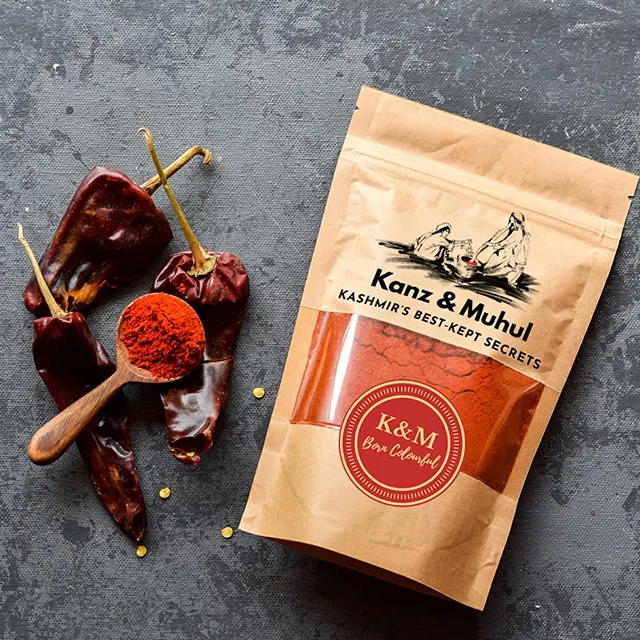
At Kanz & Muhul, our walnuts are sourced directly from farms in the Kashmir valley, graded for kernel quality and packaged without additives. These walnuts will tell you about cold mountain air, deep soil, and trees that have been patient for a very long time.